
From Sugar Cane Fields to the Show
The Complete History of Dominican Baseball
Brennen Flores
Passport-Sports
The Dominican Republic has a population of 11 million — about 3% the size of the United States. It produces nearly 10% of all Major League Baseball players. This is the story of how that happened — from the sugar cane fields of the 1870s to the largest contract in professional sports history.
150 Years of Dominican Baseball
Eleven eras that shaped a nation’s identity — and changed baseball forever.
c. 1870s
The Game Arrives
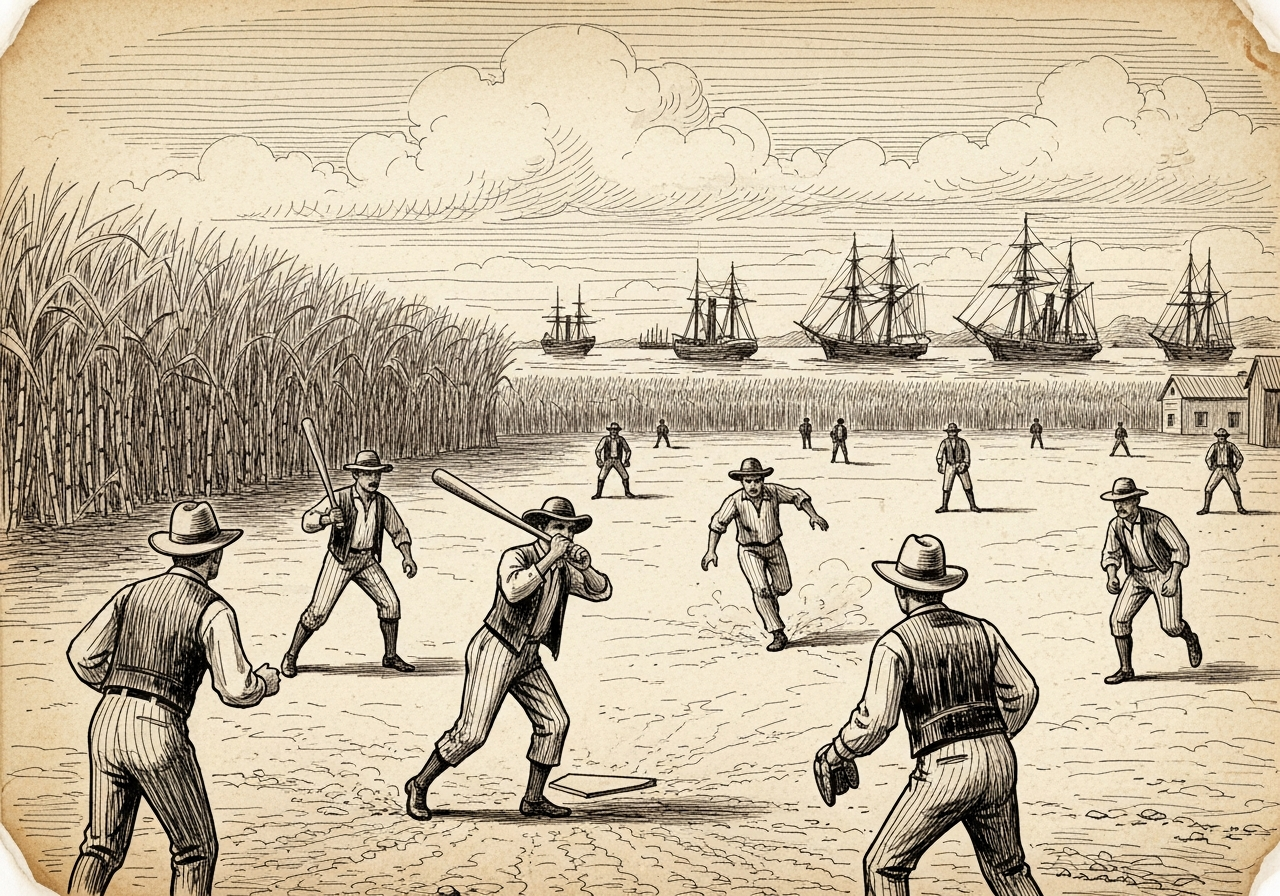
Cuban exiles fleeing the Ten Years’ War (1868–1878) carried baseball across the Windward Passage to the Dominican Republic. The brothers Alomá and Ignacio, along with other émigrés, introduce the sport in the sugar-producing regions of the southeast — planting the seed of what would become a national obsession.
Unlike the American origin story of leisurely gentlemen’s clubs, Dominican baseball was born from displacement and revolution. Cuban plantation workers and merchants brought bats, balls, and the rules of the game to a country that had no organized sport of its own. Baseball took root not in cities but in the cane fields — among laborers who played in the dirt after long shifts. From the very beginning, the Dominican relationship with baseball was inseparable from work, community, and survival.
Sept. 25, 1886
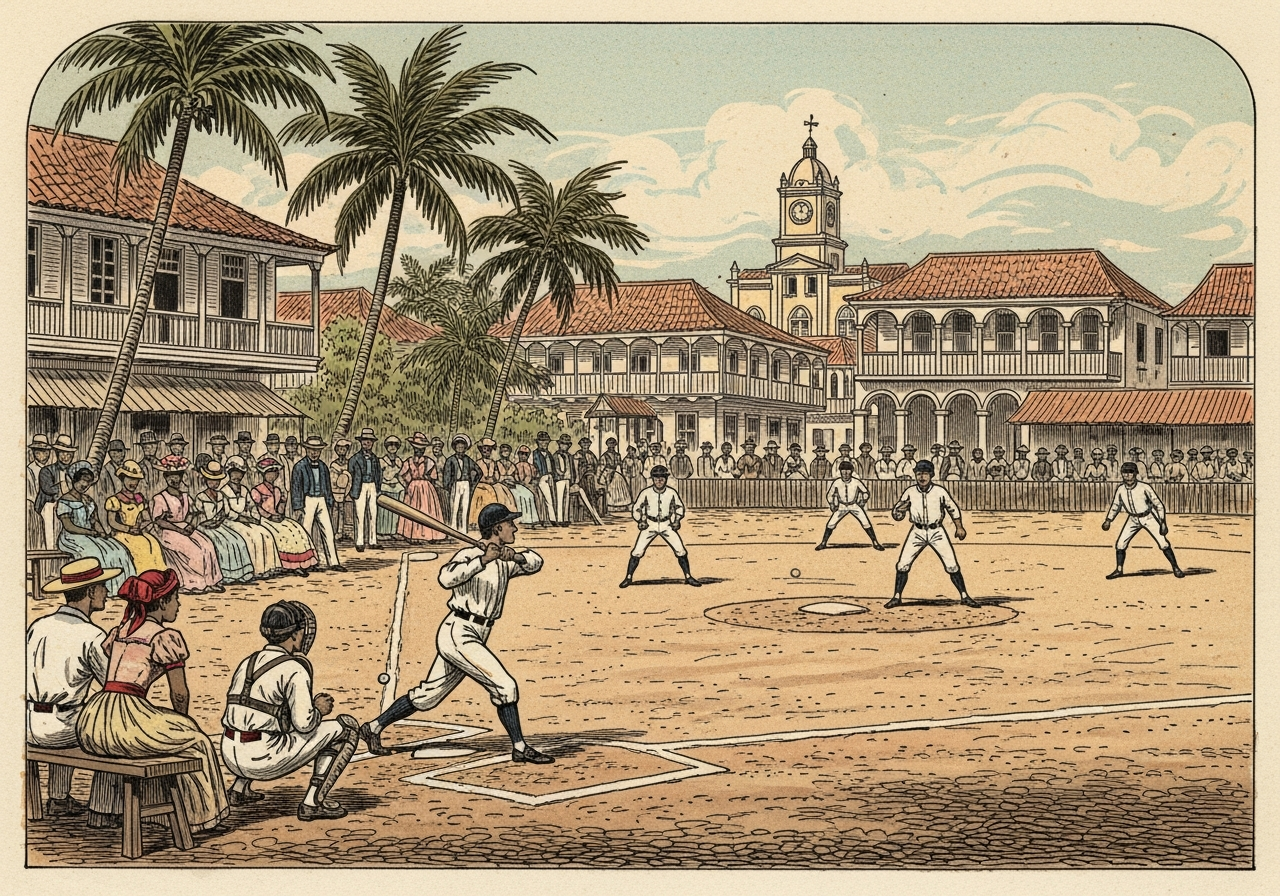
The First Recorded Game
The first documented baseball game on Dominican soil takes place in San Pedro de Macorís — a match between two Cuban teams. The city that would one day be called ‘the cradle of shortstops’ hosts the sport’s very first chapter on the island.
San Pedro de Macorís was already a hub of sugar production and Cuban migration when baseball arrived. The game between the two Cuban squads drew local spectators who had never seen the sport, and within months, Dominican-born players were forming their own teams. The location was prophetic: San Pedro would go on to produce more MLB shortstops per capita than any city on earth — including Sammy Sosa, Robinson Canó, and Alfonso Soriano.
1907–1921
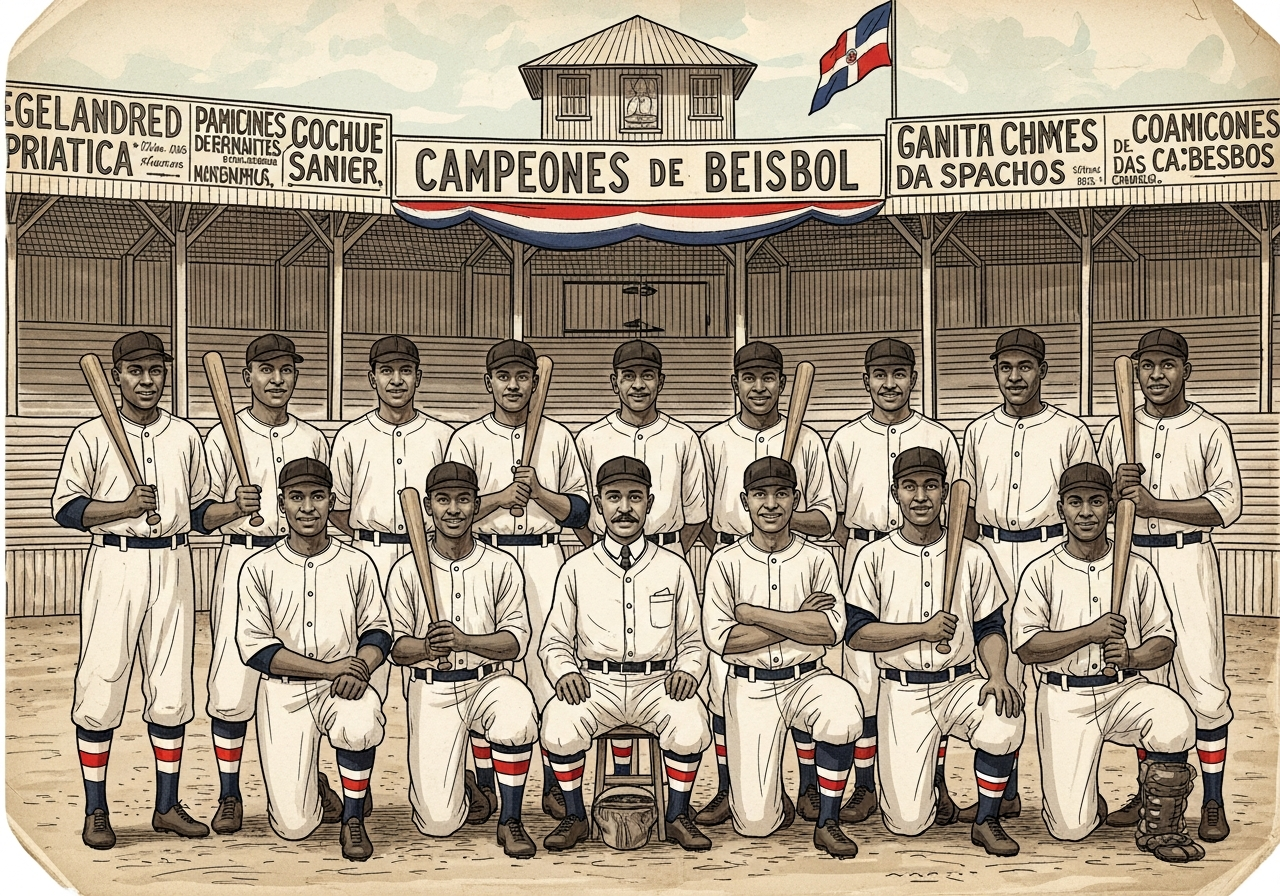
The Founding of the Giants
The clubs that would define Dominican professional baseball are established. Tigres del Licey (1907), Leones del Escogido (1921), and Estrellas Orientales (1911) are franchises that still anchor LIDOM (the Dominican Professional Baseball League) today.
These weren’t corporate franchises — they were neighborhood institutions. Licey and Escogido, both based in Santo Domingo, developed one of the fiercest rivalries in all of baseball, splitting the capital’s loyalties in half. Estrellas Orientales, based in San Pedro de Macorís, became the pride of the southeast. The founding of these clubs formalized Dominican baseball and gave it structure, tradition, and identity that would endure for over a century. The Dominican Winter League they compete in remains one of the most respected professional leagues outside MLB.
1930s–1940s
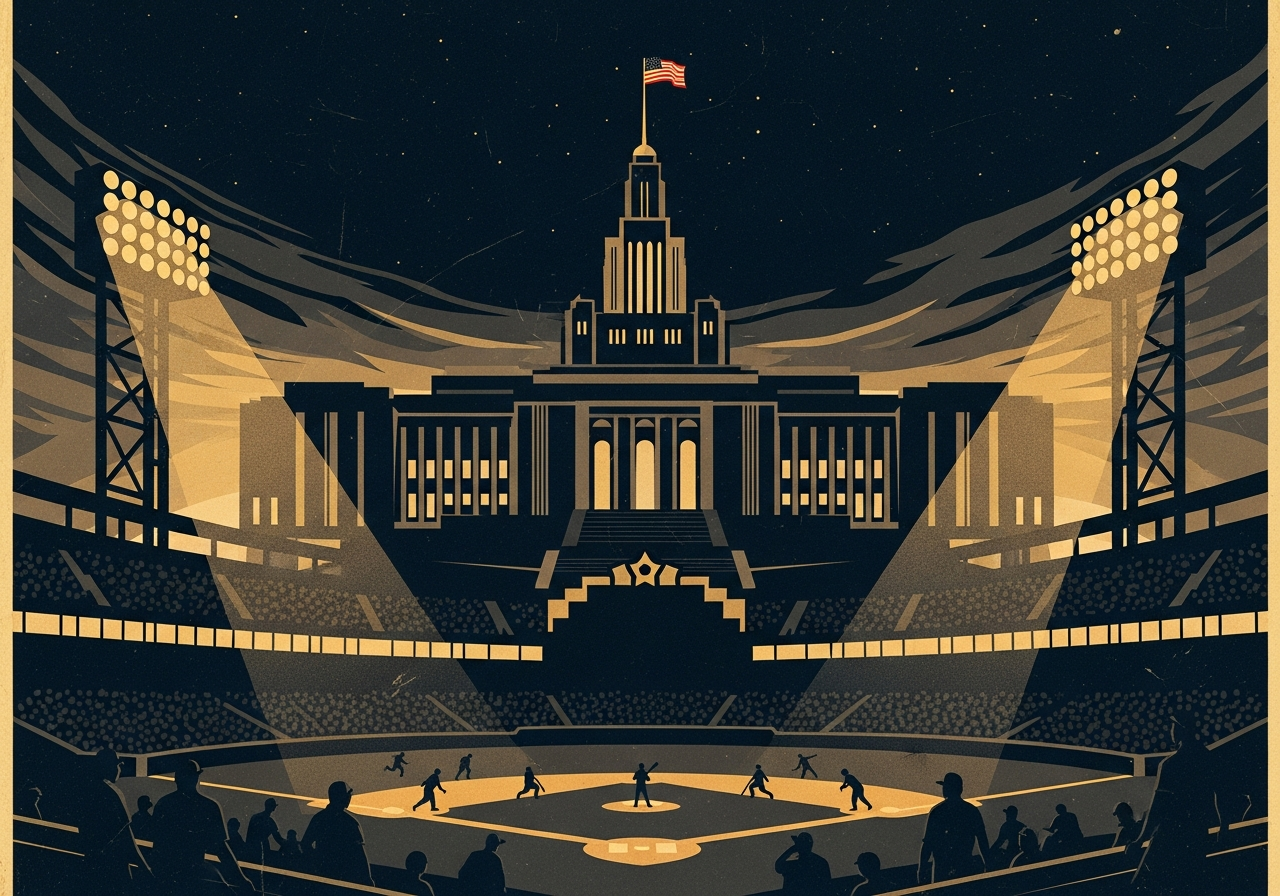
Trujillo and the Hijacking of the Game
Dictator Rafael Trujillo seizes power and co-opts baseball as a tool of political propaganda. He renames Santo Domingo as ‘Ciudad Trujillo’ and recruits Negro League stars — including Satchel Paige — to play for his team. When the propaganda value fades, he shuts down professional baseball for nearly a decade.
1948
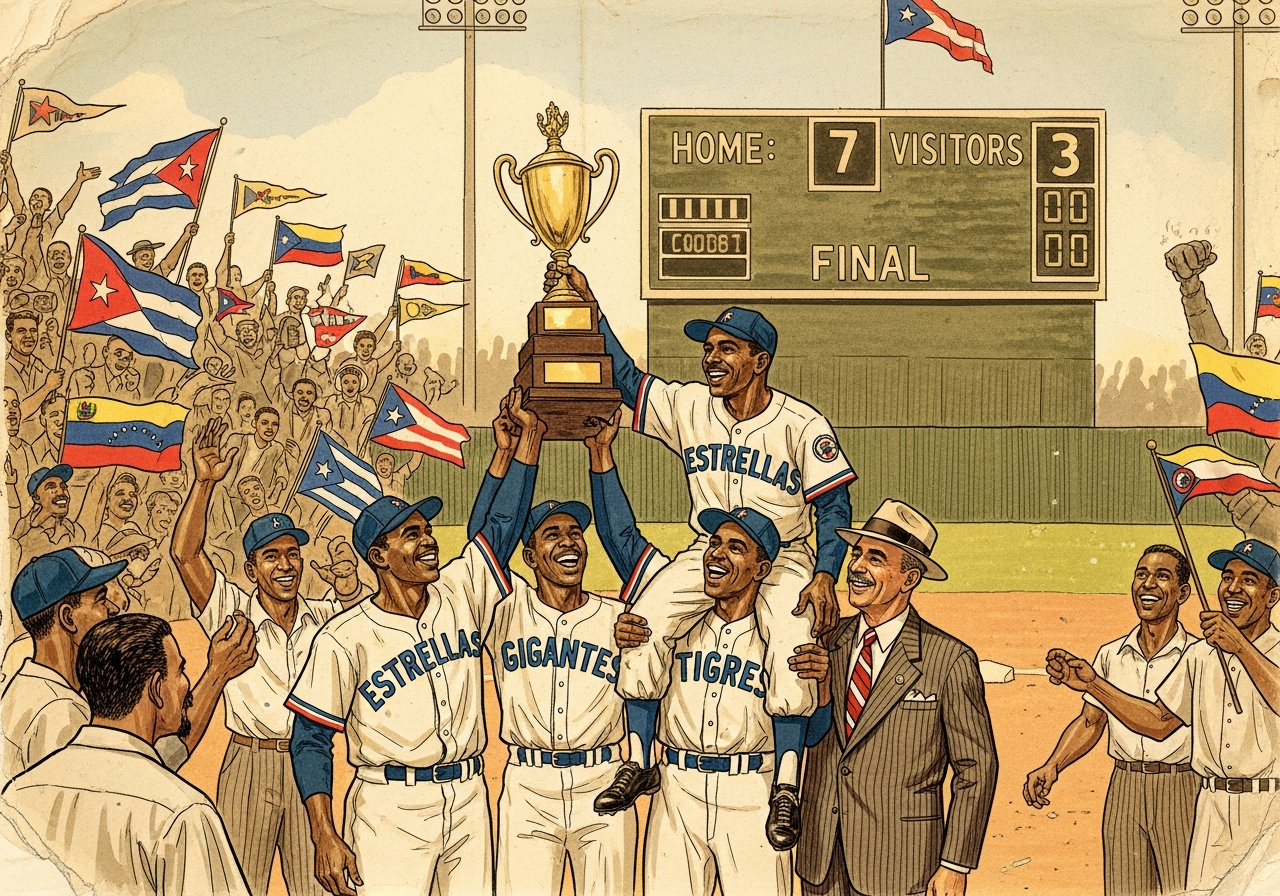
World Champions Before MLB
The Dominican Republic wins the Amateur Baseball World Cup — becoming world champions before a single Dominican-born player had ever appeared in a Major League Baseball game. The victory proved what the island already knew: Dominican baseball was world-class.
The 1948 Amateur World Series, held in Nicaragua, featured teams from across the Americas. The Dominican squad — composed entirely of domestic talent with no professional experience in the United States — defeated powerhouse Cuba and every other opponent to claim the title. It was a statement to the world, though the world wasn’t yet paying attention. It would take another eight years before MLB would give a Dominican player a chance to prove what the island had already demonstrated on the international stage.
Sept. 23, 1956
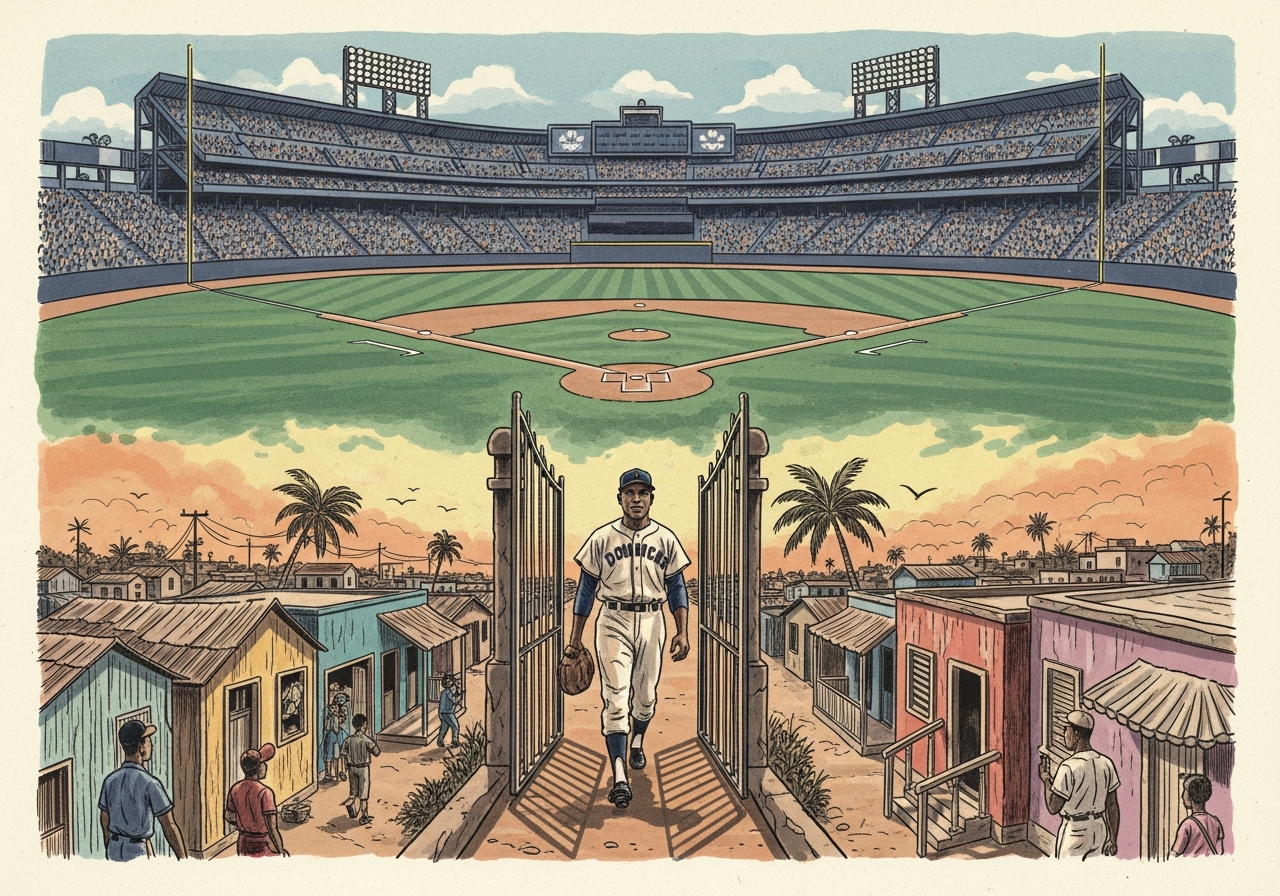
Ozzie Virgil Sr. Breaks the Barrier
Osvaldo José Virgil Pichardo — Ozzie Virgil Sr. — debuts for the New York Giants, becoming the first Dominican-born player in Major League Baseball history. He opens a door that would never close.
Virgil was born in Monte Cristi, Dominican Republic, and moved to New York as a teenager. His debut with the Giants on September 23, 1956, was historic, though it received little fanfare at the time. Virgil played nine MLB seasons across four teams, batting .231 with 14 home runs. His statistics were modest, but his significance was immeasurable. He proved that Dominican players could compete at the highest level — and every Dominican who followed him through that door, from Juan Marichal to Pedro Martínez to Juan Soto, walks a path he cleared first.
1970s–1987
The Academy Revolution
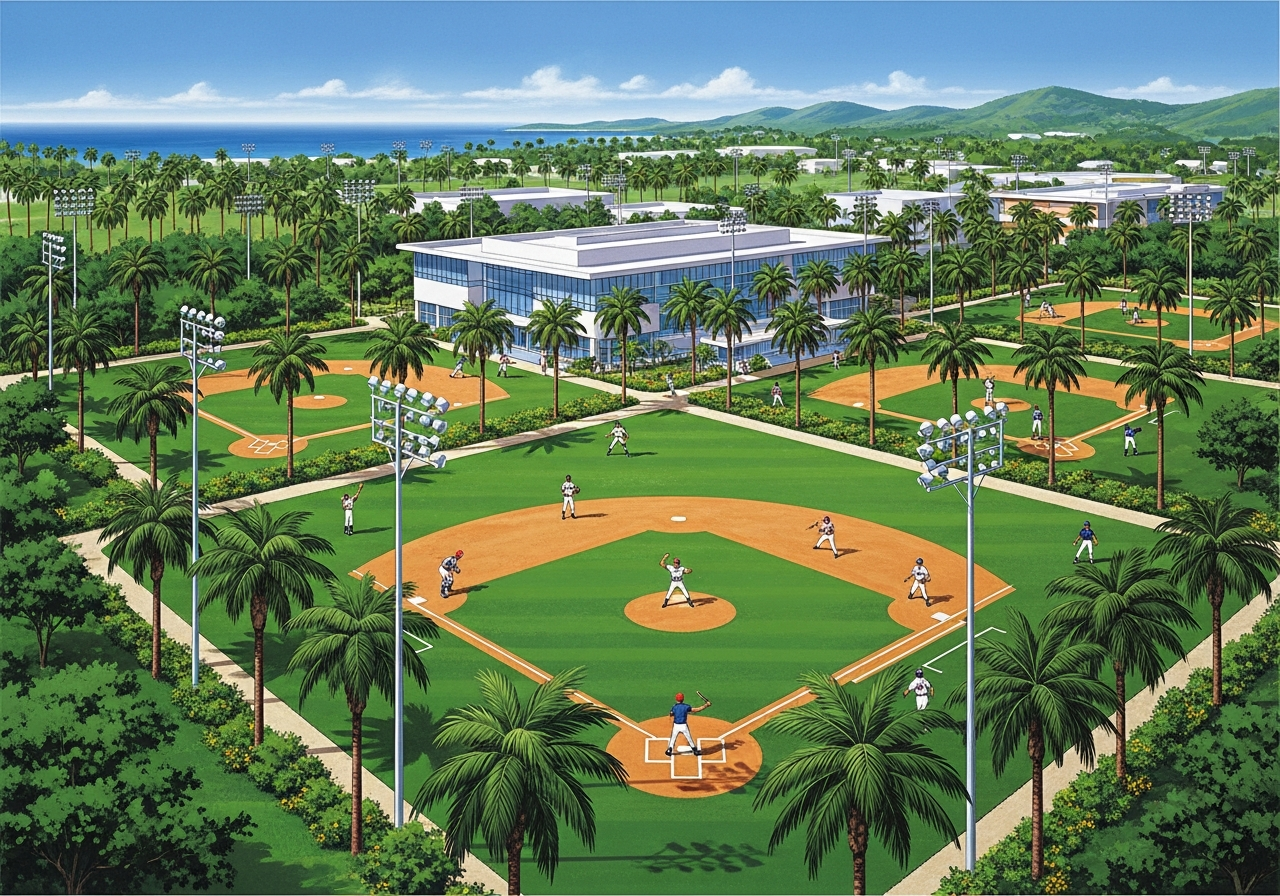
Scout Epy Guerrero pioneers a new model — identifying and developing Dominican talent locally rather than waiting for players to come to the U.S. In 1987, the Los Angeles Dodgers opened Campo Las Palmas, the first official MLB training academy on the island. Every other team follows.
Epy Guerrero, a Dominican-born scout working for the Toronto Blue Jays, changed everything. He established informal training programs on the island, developing players in their own environment before presenting them to MLB clubs. The Dodgers formalized the concept with Campo Las Palmas — a state-of-the-art facility with professional fields, dormitories, classrooms, and coaching staff. The economics were compelling: teams could sign and develop 20 Dominican prospects for the cost of one American draft pick. Within 16 years, all 30 MLB organizations had built academies in the Dominican Republic, creating the most concentrated baseball development infrastructure on earth.
1990s–2000s
The Golden Era
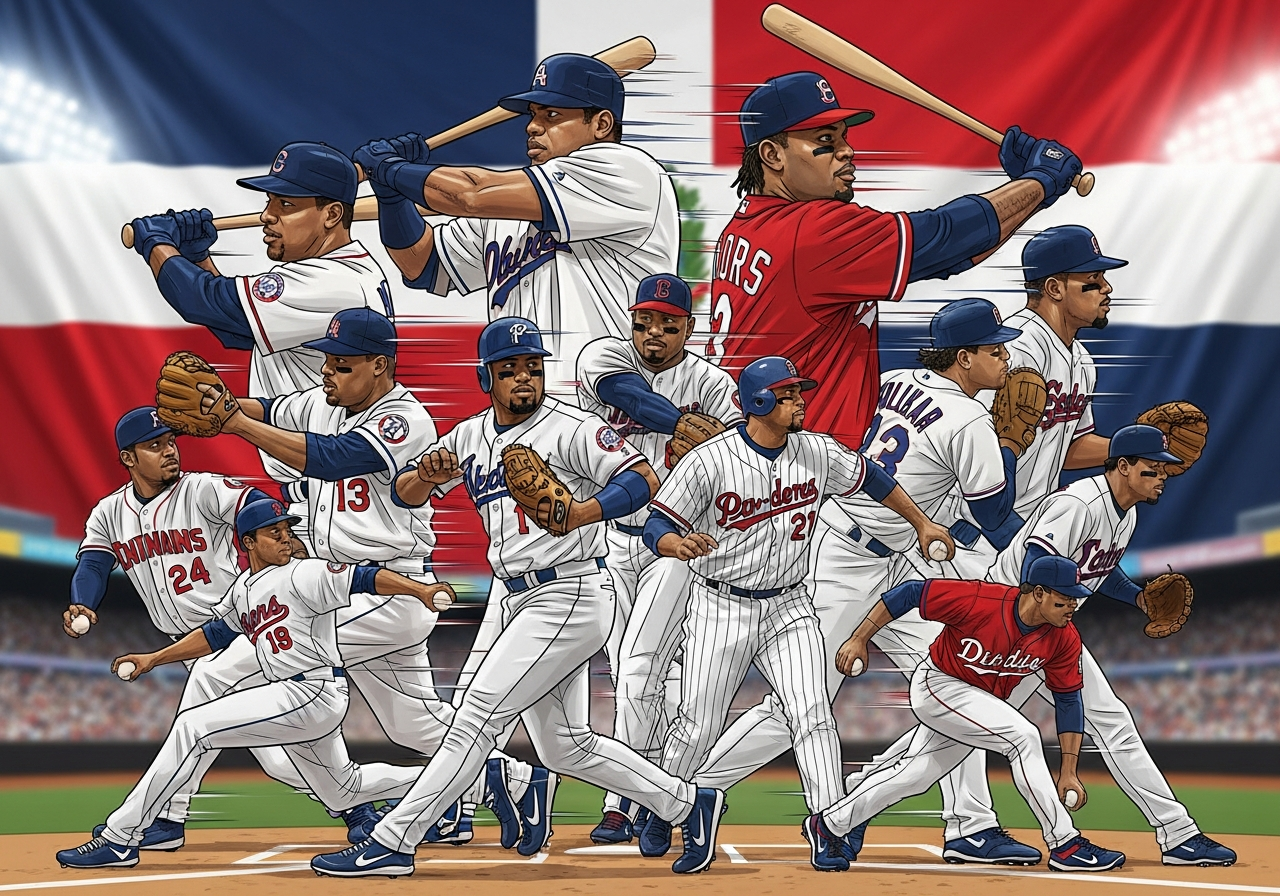
Dominican players don’t just reach MLB — they redefine it. Pedro Martínez, Sammy Sosa, David Ortiz, Albert Pujols, Manny Ramírez, and Vladimir Guerrero became some of the biggest names in the history of the sport. The Dominican Republic is no longer an MLB pipeline — it is an MLB powerhouse.
The generation that came through the academy system in the late 1980s and 1990s produced an unprecedented concentration of superstar talent. Pedro Martínez won three Cy Young Awards and is widely considered one of the greatest pitchers in history. Sammy Sosa’s 1998 home run chase with Mark McGwire captivated the entire nation. David Ortiz became the most clutch postseason hitter of his era. Albert Pujols was named the best player in baseball for the better part of a decade. These weren’t just good players from the Dominican Republic — they were the best players in the world, period.
March 19, 2013
Undefeated World Champions
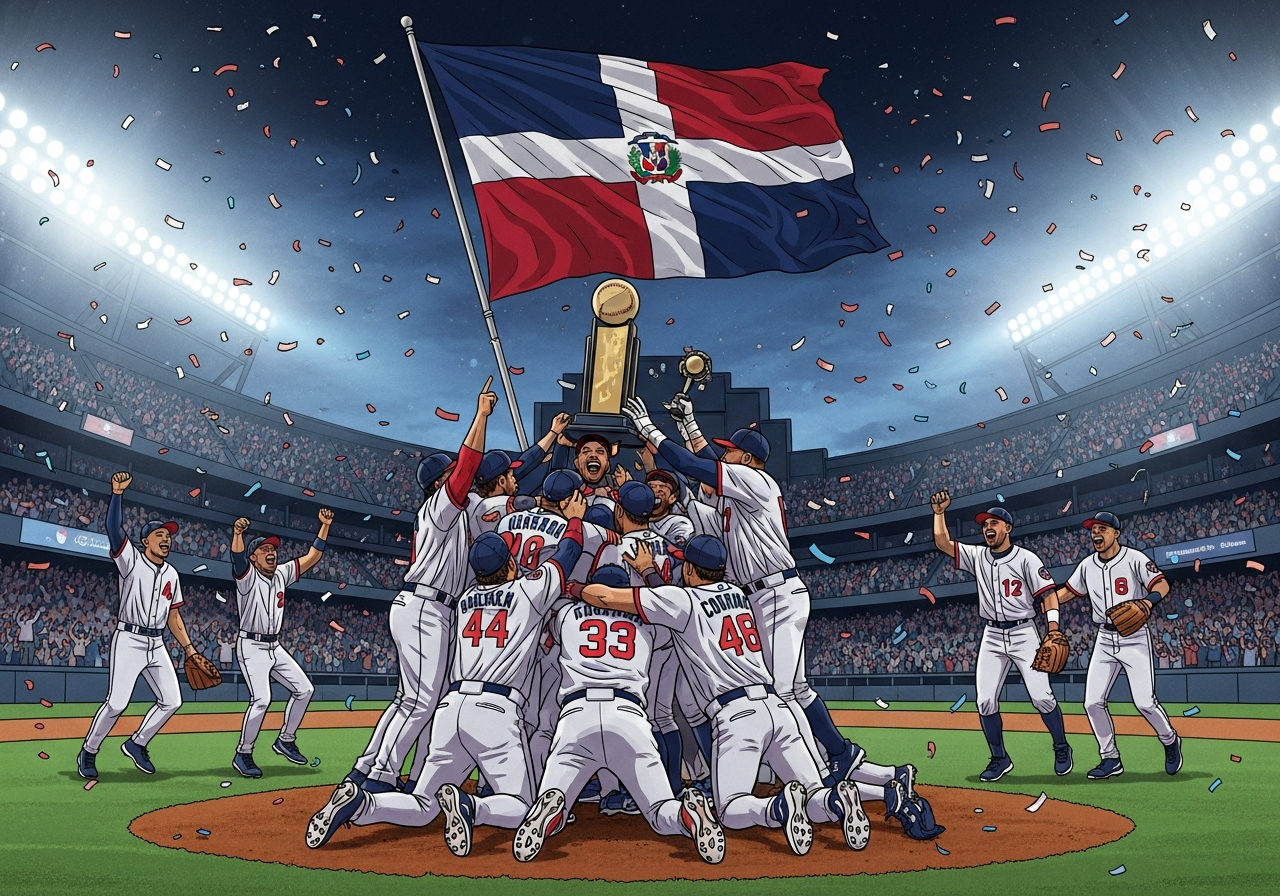
The Dominican Republic goes 8–0 to win the World Baseball Classic — becoming the first and only team in WBC history to win the tournament without losing a single game. Robinson Canó is named MVP as the island celebrates in the streets.
The 2013 WBC run was a statement of dominance. The Dominican team — featuring Robinson Canó, Edwin Encarnación, Nelson Cruz, Fernando Rodney, and Santiago Casilla — steamrolled through pool play and the championship bracket without a loss. They defeated Puerto Rico 3–0 in the final at AT&T Park in San Francisco. Canó hit .469 with two home runs and earned MVP honors. Back home, the victory triggered spontaneous celebrations across the entire country — streets flooded, car horns blared, and the Dominican flag flew everywhere. It remains the greatest single achievement in Dominican baseball history.
2019
The 100-Player Milestone
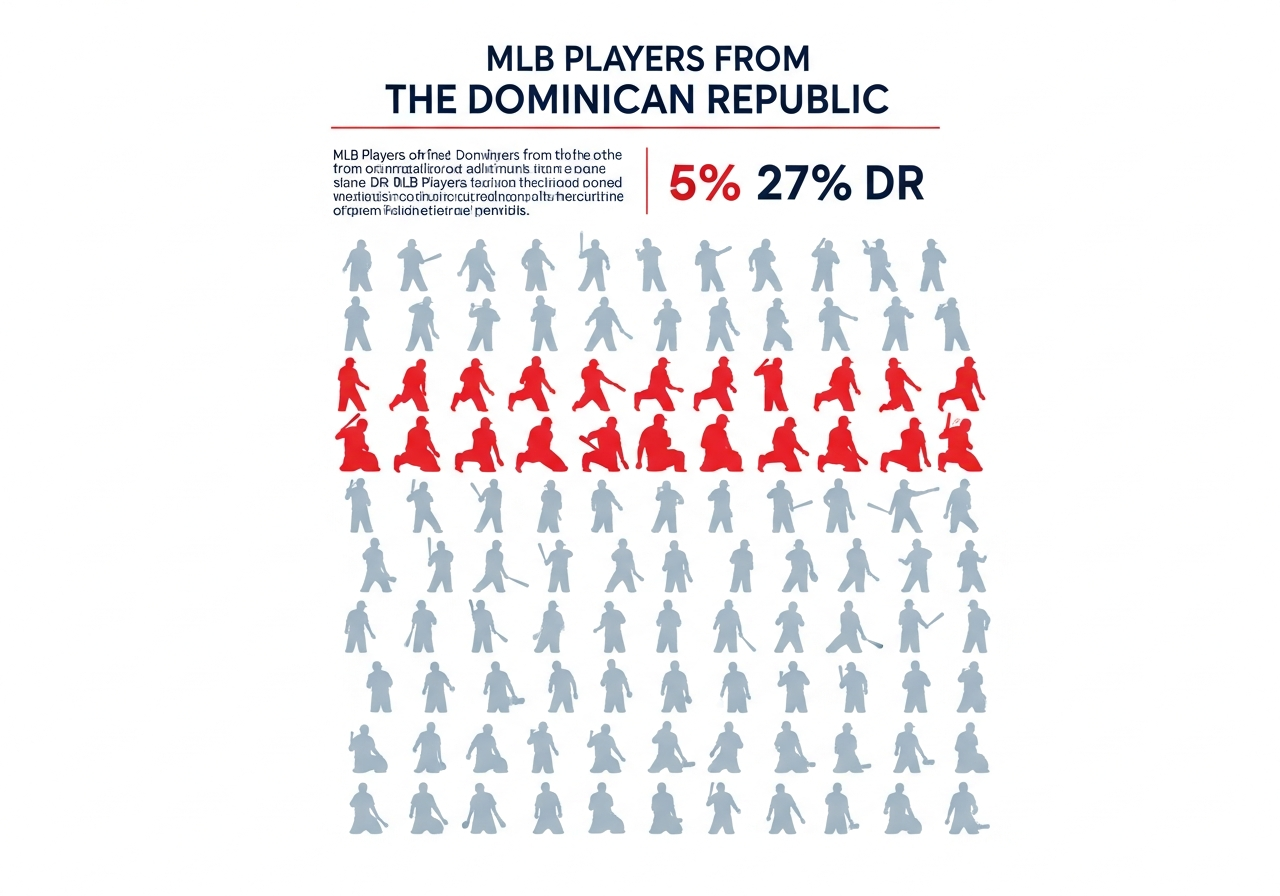
On MLB Opening Day 2019, 102 Dominican-born players appeared on major league rosters — the first time any foreign nation has placed more than 100 players in MLB simultaneously. The Dominican Republic isn’t just participating in baseball’s highest level; it is indispensable to it.
The 102-player milestone represented nearly 12% of all MLB roster spots. To put that in perspective: the Dominican Republic, with a population smaller than Ohio’s, was supplying more than one in ten players in the world’s premier baseball league. No other country outside the United States had ever reached even 50. The milestone was a testament to the depth of the Dominican pipeline — not just producing stars, but producing hundreds of everyday contributors, role players, and journeymen who form the backbone of MLB rosters across all 30 teams.
2025–Present
The Pipeline Has No Off Switch
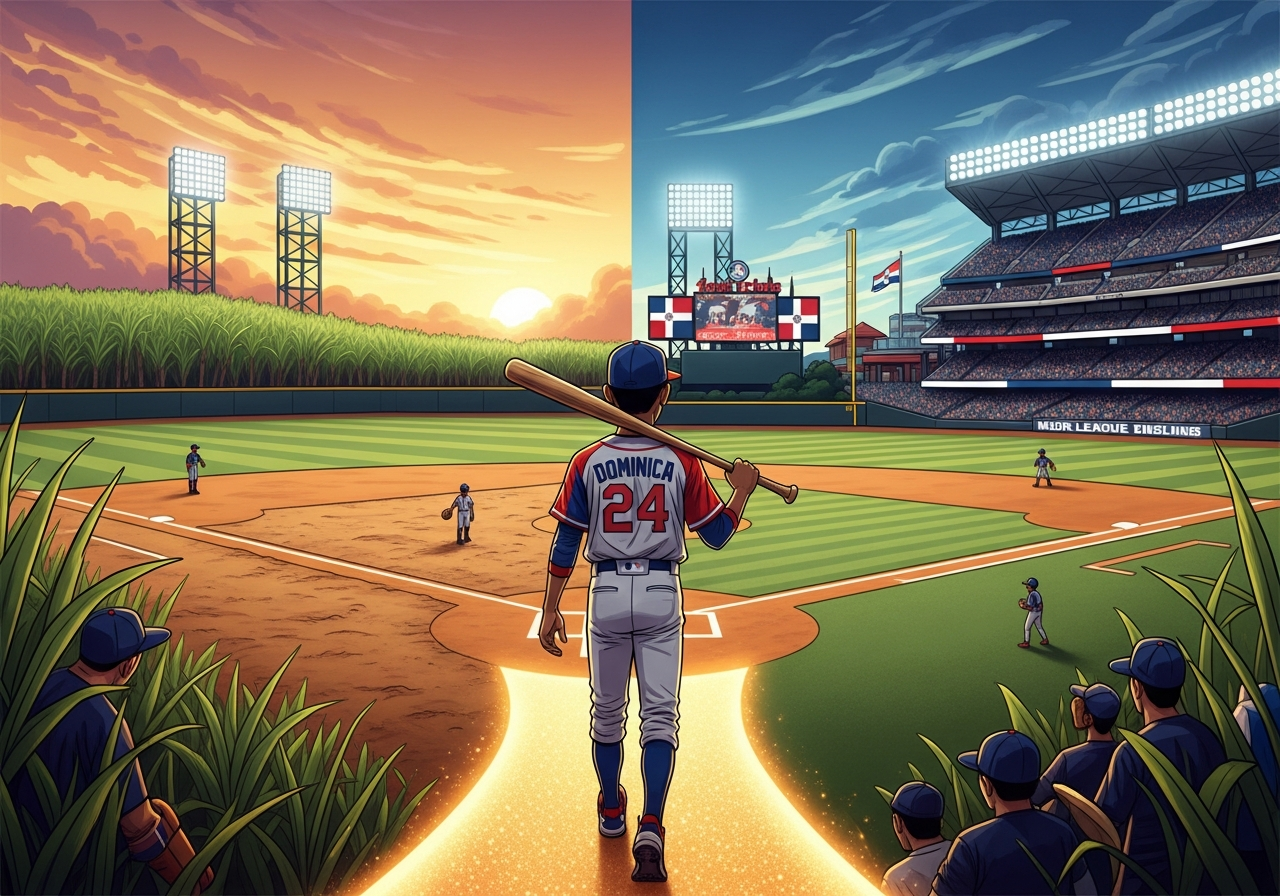
In 2025, 144 Dominican players appeared in MLB — 9.79% of the league. Juan Soto signs the largest contract in North American professional sports history. The Dominican Republic’s hold on baseball’s highest level is stronger than ever.
Juan Soto’s 15-year, $765 million contract with the New York Mets in December 2024 shattered every record in professional sports — a deal earned by a player who grew up in the Ensanche Ozama neighborhood of Santo Domingo and signed his first professional contract at 16. Meanwhile, the pipeline keeps producing: 144 Dominican-born players appeared on 2025 MLB rosters, and hundreds more fill minor league systems across the country. From the sugar cane fields of the 1870s to the largest contract in sports history, the Dominican Republic’s baseball story is still being written — and its next chapter is already on a dirt field somewhere on the island, being lived by a kid with a bat and a dream.
Author: Brennen Flores
Passport-Sports
https://passport-sports.com/blog/history-of-dominican-baseball
https://passport-sports.com/
Disclaimer: The views and opinions expressed in this blog post are those of the author and do not necessarily reflect the official policy or position of BaseballConnected. We do not endorse, approve, or necessarily agree with the content, opinions, statements, or recommendations made in this blog post. It is published for informational or discussion purposes only. Readers should exercise their own independent judgment and conduct their own research before relying on any information presented here.